NVIDIA Neural Texture Compression Explained: Can AI Cut Game VRAM Usage from 6.5GB to 970MB?
VRAM has become one of the most annoying topics in PC gaming.
Not because players suddenly started caring about memory numbers for fun, but because a lot of modern games are now extremely hungry for video memory. High-resolution textures, huge open worlds, ray tracing, path tracing, dense environments and bad optimization can push even decent GPUs into trouble.
That is why NVIDIA’s Neural Texture Compression, or NTC, is interesting.
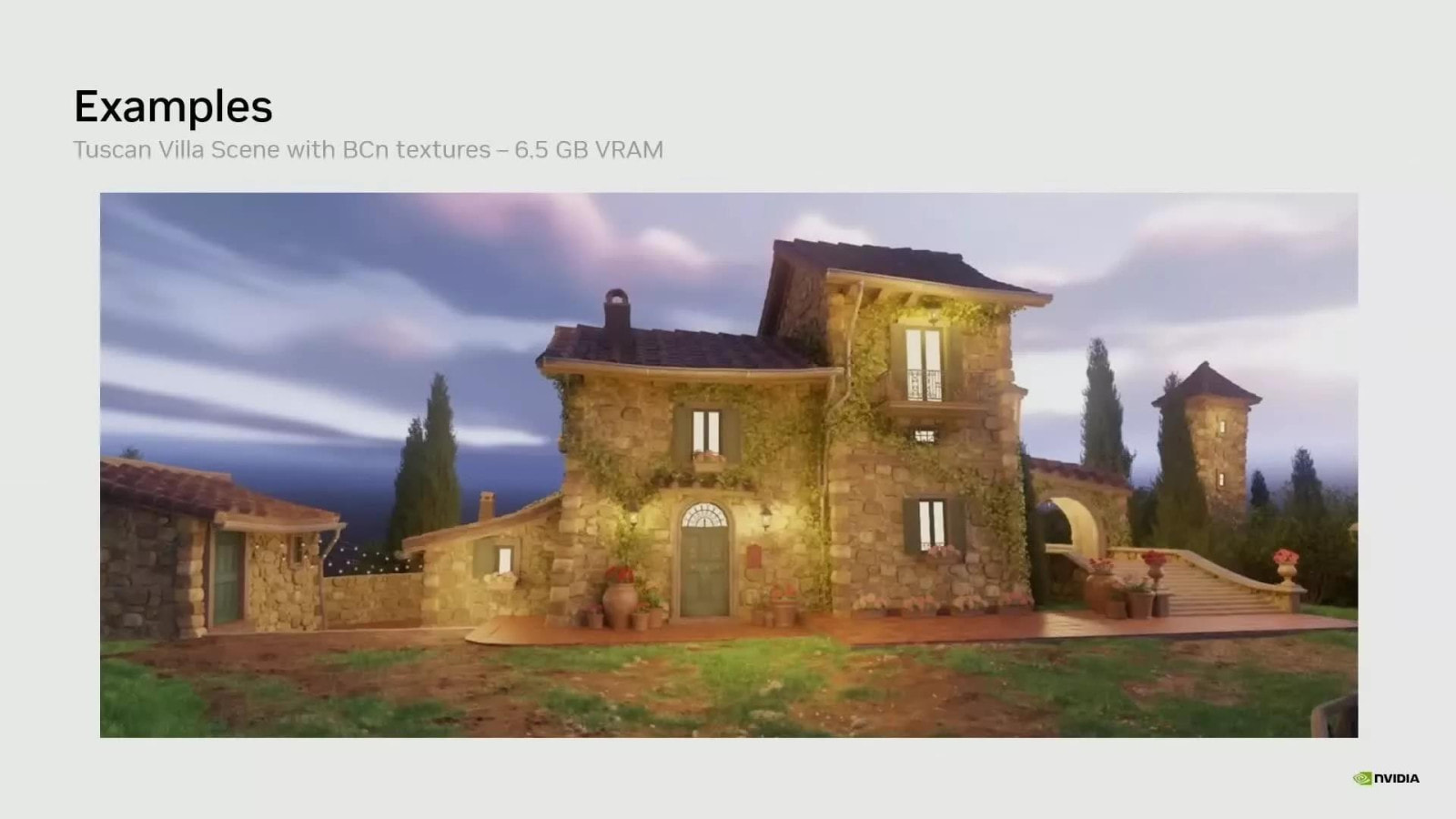
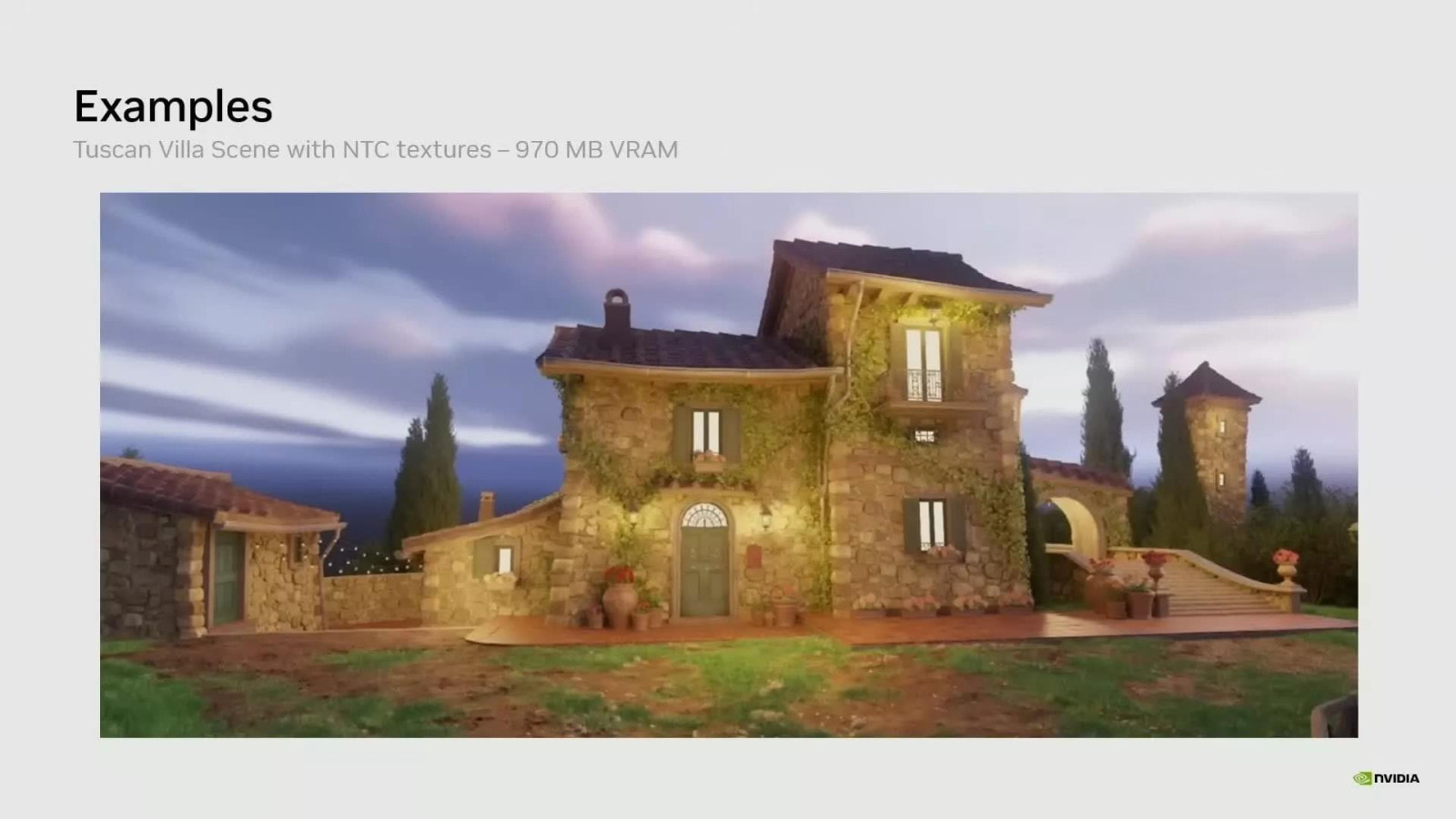
In one of NVIDIA’s demos, texture memory usage reportedly dropped from around 6.5GB to 970MB.
That sounds huge. Almost too good to be true.
But the important question is this:
Can this actually help real games, or is it just another impressive tech demo?
Why VRAM Became a Problem
A few years ago, 8GB of VRAM felt fine for many gaming PCs.
Now, it can feel tight depending on the game, resolution and texture settings. Some games run well, while others suddenly throw VRAM warnings, texture streaming problems, stutters or crashes.
This is especially painful for people using cards like:
- 8GB GPUs
- 10GB GPUs
- 12GB GPUs
- laptop GPUs with limited VRAM
- older high-end cards that still have strong raw performance but limited memory
The strange part is that the GPU itself may still be powerful enough. The problem is often memory pressure.
When a game loads too many high-resolution textures into VRAM, something has to give. You either lower texture quality, reduce resolution, disable heavy features, or deal with stutter and crashes.
That is the exact problem NVIDIA Neural Texture Compression is trying to attack.

What Is NVIDIA Neural Texture Compression?
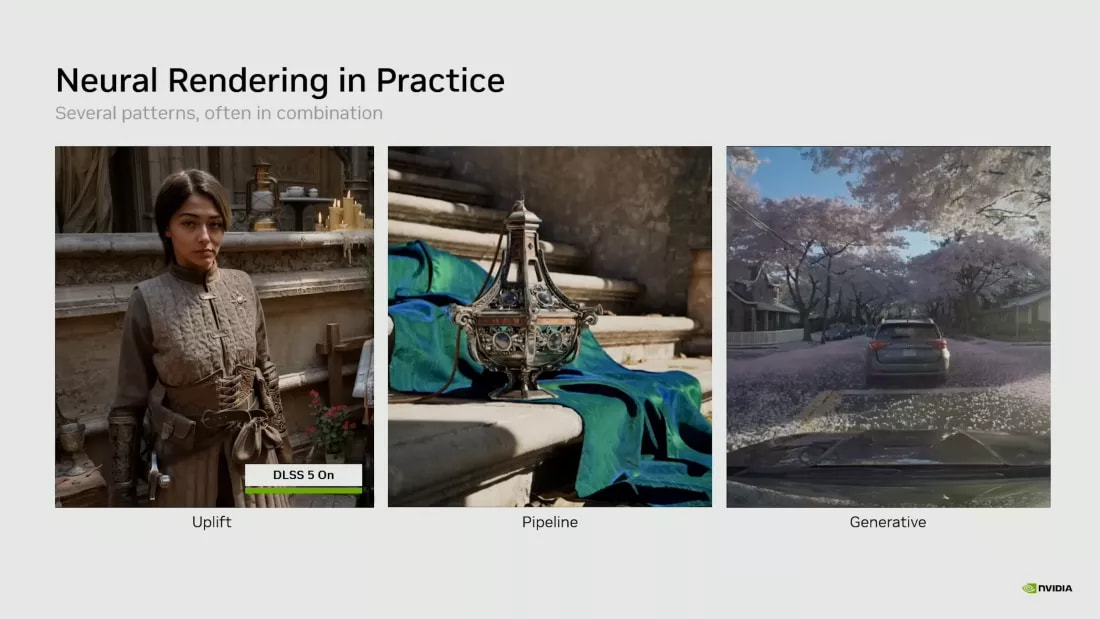
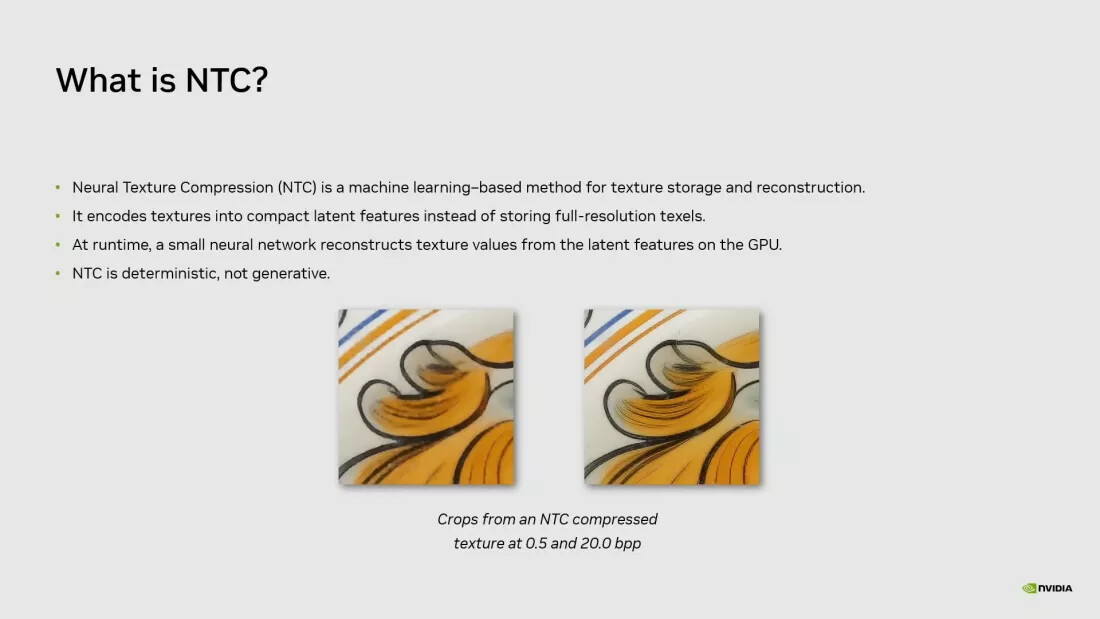
Neural Texture Compression is a new way of compressing game textures using a small neural network.
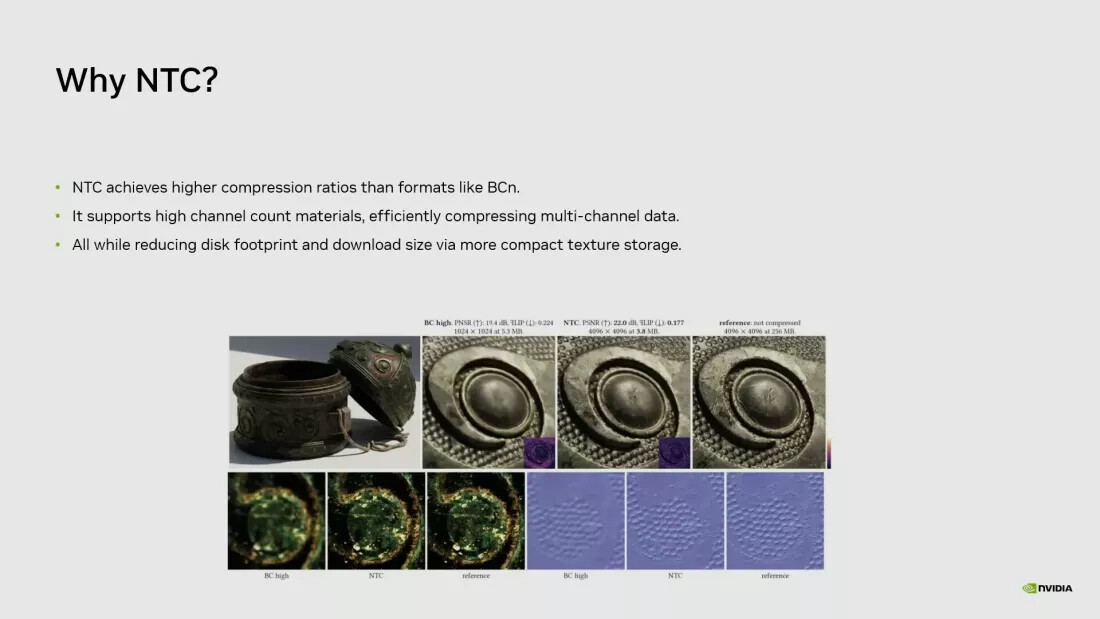
Traditional texture compression methods store textures in fixed block formats. They are fast and widely supported, but they also have limits. Push them too hard and the image quality starts to break. Keep quality high and VRAM usage stays high.
NTC takes a different approach.
Instead of storing all texture data in the usual way, it compresses texture information into a much smaller representation. Then, during gameplay, the GPU reconstructs the texture data when needed.
The simple version:
Store less texture data in memory, reconstruct it efficiently on the GPU, and keep the final image close to the original quality.
That is the promise.
Is This “AI Making Up Textures”?
Not really.
This is an important point, because a lot of players are tired of every new graphics feature being called “AI.”
NTC is not like a random image generator creating new texture details out of nowhere. It is not supposed to invent a new wall, a new skin pattern or a fake material.
It is closer to a smarter compression system.
The texture data is still based on the original asset. The neural network is used to store and reconstruct it more efficiently.
So the better way to think about it is:
AI-assisted compression, not AI-generated art.
That distinction matters.
The 6.5GB to 970MB Demo
The number that caught everyone’s attention was the demo where texture memory usage dropped from around:
6.5GB
to around:
970MB
That is a massive reduction.
If this kind of result can be used in real games, it could be a big deal for players who are constantly hitting VRAM limits.
But there is one catch: demos are controlled environments.
A demo scene is not the same thing as a full open-world game with dynamic lighting, fast movement, streaming assets, weather, NPCs, vehicles, cutscenes and unpredictable player behavior.
So I would not look at this and say:
“Every game will suddenly use 85% less VRAM.”
That is not realistic.
The better takeaway is:
NVIDIA has shown that neural texture compression can dramatically reduce texture memory in certain cases, and now the question is whether game developers will actually use it well.
Why This Could Matter for 8GB GPUs
This is where the technology becomes interesting for normal players.
If NTC becomes widely used, it could help GPUs with limited VRAM survive longer in future games.
That does not mean an 8GB GPU will magically become a 16GB GPU. It also does not mean every performance problem disappears.
But it could reduce one of the biggest pressure points: texture memory.
For example, if a game currently forces you to lower textures because VRAM usage is too high, neural texture compression could allow better texture quality within the same memory budget.
That would be a real win.
Especially for cards that still have enough GPU power but keep running into VRAM limits.
Could This Reduce Game Install Sizes Too?
Maybe, but it depends on implementation.
If developers store compressed texture data more efficiently, game install sizes could become smaller. Updates could also become lighter if texture packages are reduced.
That would be great, because modern games are getting ridiculous in storage size.
But I would be careful here. Install size depends on many things:
- textures
- audio
- video files
- duplicate assets
- localization files
- patches
- engine structure
- platform requirements
So yes, NTC could help with storage, but it is not a guaranteed “games will be tiny now” solution.
Can Players Enable This in NVIDIA Control Panel?
No, not in the normal sense.
This is not like turning on DLSS, Reflex or a driver option.
Neural Texture Compression has to be integrated by developers. The game engine and asset pipeline need to support it.
That means players cannot simply open NVIDIA Control Panel and enable NTC for every game.
For now, the practical answer is:
This is a developer-side technology. Players benefit only if games actually use it.
That is probably the biggest limitation right now.
Does It Only Work on NVIDIA GPUs?
NVIDIA is obviously pushing this as part of its RTX neural rendering ecosystem, and RTX GPUs with Tensor Cores are the most obvious target.
But the broader idea of neural texture compression does not have to be locked to one brand forever.
The real-world situation will depend on:
- engine support
- SDK support
- GPU architecture
- performance cost
- developer adoption
- whether AMD and Intel get practical implementations
- whether console hardware adopts similar ideas
For PC players, the important part is not just “can it technically run?” but whether developers can use it without creating a mess across different GPUs.
If it becomes too complicated, adoption may stay limited.
Why Developers Might Care
Developers are under pressure too.
They want better visuals, more detailed worlds and richer materials. But they also have to fit everything into console memory limits, PC GPU limits and storage limits.
NTC could help them push more detail without exploding VRAM usage.
Possible benefits:
- lower texture memory usage
- better material detail within the same VRAM budget
- fewer compromises on texture quality
- smaller texture packages
- more detailed environments
- better support for mid-range GPUs
For large open-world games, this could be especially useful.
Games like modern RPGs, racing games, shooters and open-world action games all struggle with texture streaming and memory budgets.
Why Players Should Still Be Skeptical
This technology sounds promising, but we should be realistic.
Right now, the big issue is not whether the demo is impressive. It is.
The issue is adoption.
A graphics feature only matters to players when it appears in actual games.
We have seen many impressive rendering technologies that looked amazing in demos but took years to become common. Some never became common at all.
NTC needs:
- game engine integration
- developer tools
- real performance testing
- good visual quality
- low enough GPU cost
- support across different hardware
- actual game releases using it
Until then, it is promising technology, not a guaranteed fix for the VRAM problem.
Is This a Real Solution or Just a Band-Aid?
Honestly, maybe both.
On one hand, neural texture compression is genuinely useful. Making texture data more efficient is a good idea. If we can keep quality high while using less VRAM, that is a technical win.
On the other hand, many players will still ask the obvious question:
Why not just put more VRAM on GPUs?
That criticism is fair.
Compression helps, but it should not become an excuse for selling expensive graphics cards with barely enough memory.
The best future would be both:
- more VRAM on GPUs
- smarter texture compression
- better optimization from developers
Not just one of them.
Why This Reminds Me of Current VRAM Problems in Games
This topic immediately made me think of games that aggressively use VRAM or crash because of memory allocation problems.
Some recent games can throw errors, stutter badly, or force settings down even on hardware that should be capable enough.
That is why technologies like NTC are interesting. Not because they are magic, but because VRAM pressure is becoming one of the most visible problems in PC gaming.
If future games can keep high-quality textures while using much less memory, players with 8GB or 12GB GPUs may get a much better experience.
But again, only if developers actually use it.
Quick FAQ
What is NVIDIA Neural Texture Compression?
It is a neural compression method designed to reduce texture memory usage in games and rendering workloads.
Does it reduce VRAM usage?
In NVIDIA’s demos, yes, dramatically. One demo showed texture memory going from around 6.5GB to 970MB.
Can I enable it in my games right now?
No. It has to be built into the game or engine by developers.
Is it the same as DLSS?
No. DLSS is mainly about image reconstruction/upscaling/frame generation depending on the version. NTC is about texture compression and memory efficiency.
Is it generative AI?
Not in the usual sense. It is not randomly creating new textures. It is using neural compression to represent and reconstruct texture data more efficiently.
Will it save 8GB GPUs?
It could help, but it will not magically fix every limitation. It depends on adoption and how well games implement it.
Are any major games using it now?
At the moment, this still looks like a future-facing technology rather than something widely used in released games.
Useful Links
NVIDIA RTX Neural Texture Compression SDK:
https://github.com/NVIDIA-RTX/RTXNTC
NVIDIA neural rendering / RTX Kit blog:
https://developer.nvidia.com/blog/get-started-with-neural-rendering-using-nvidia-rtx-kit/
Final Thoughts
NVIDIA Neural Texture Compression is one of the more interesting graphics technologies right now because it targets a real problem: VRAM usage.
A lot of players are tired of seeing new games eat memory like crazy, especially when many mid-range GPUs still ship with 8GB or 12GB of VRAM.
The 6.5GB to 970MB demo is impressive, but I would not treat it as a universal promise. Real games are more complicated than demos.
Still, if developers adopt this properly, NTC could become a big deal for future PC games.
Not because it makes weak hardware powerful, but because it may let games use existing VRAM much more intelligently.
That is exactly the kind of optimization PC gaming needs more of.
What do you think?
Would neural texture compression actually help the 8GB GPU problem, or should GPU makers simply stop selling cards with limited VRAM?