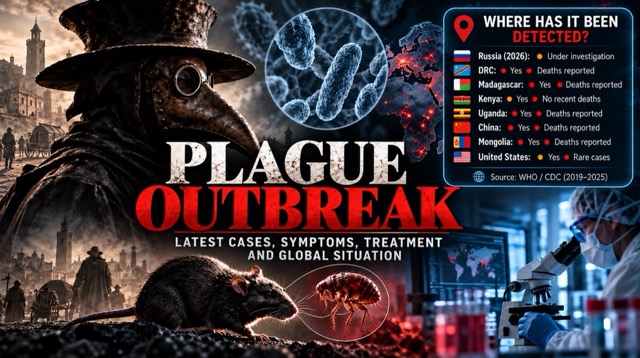
Could the Black Death return in 2026? Reports surrounding the unexplained death of a Russian infectious-disease laboratory worker have revived fears about one of history’s deadliest diseases. The incident has drawn attention from the World Health Organization (WHO), prompted precautionary measures in Russia and raised questions about whether pneumonic plague could spread beyond its traditional geographic hotspots.
But the modern plague story extends far beyond Russia.
The bacterium responsible for the Black Death never disappeared. It continues circulating among animals in parts of Africa, Asia and the Americas, occasionally infecting people. Human cases are still reported in Madagascar, the Democratic Republic of the Congo, Mongolia, China and even the western United States.
In September 2026, the WHO published updated international surveillance figures covering 2019–2025. The report documented 3,860 suspected human plague cases, including 2,646 reported as confirmed, across reporting countries. Six countries that reported confirmed cases also recorded a combined 423 deaths.
Those numbers raise important questions. Where is plague still found? How dangerous is bubonic plague today? Can infected cats or rodents transmit the disease to people? Does plague spread through the air? Is there a vaccine? And could a major outbreak resemble the devastating pandemics of the Middle Ages?
This in-depth guide examines the latest developments in Russia, the countries reporting plague cases, the risk in the United States, the science behind transmission, modern treatment options and the historical pandemics that reshaped human civilization.
Plague Outbreak 2026: What Is Happening in Russia?
International concern intensified after a 28-year-old employee of the Irkutsk Anti-Plague Research Institute in Siberia died on October 2, 2026.
The employee, identified as Darya Shipilova, reportedly developed a severe respiratory illness that Russian authorities described as pneumonia of undetermined origin.
The institution where she worked specializes in dangerous infectious diseases, including plague. That connection prompted speculation about possible exposure to the bacterium Yersinia pestis.
However, there is a crucial distinction between a suspected incident and a confirmed plague outbreak.
As of October 8, 2026, Russia has not confirmed that Shipilova died from plague, and no outbreak connected to the incident has been established.
Why did Russian authorities quarantine approximately 200 people?
Following the death, Russian health officials placed roughly 200 people under quarantine or medical observation as a precaution.
The response included contact tracing, laboratory testing, environmental measures and monitoring for additional illnesses.
By October 7, Russian officials said thousands of laboratory tests had been performed and no plague infections had been identified among the deceased worker’s contacts.
Most of those initially placed under observation were reportedly released.
The extensive response reflected the seriousness of any potential exposure to a highly dangerous infectious agent. It did not, by itself, establish that plague had been detected.
What has the World Health Organization said?
The WHO requested additional information from Russia, including clarification of the cause of death and reports concerning another possible respiratory illness.
International health officials emphasized the importance of transparent laboratory findings and timely communication.
Russian authorities maintained that they had followed appropriate reporting procedures and that there was no evidence of an ongoing plague outbreak.
As of October 8, the available information does not establish a confirmed transmission chain or a wider community outbreak.
Has the suspected Russian plague incident spread internationally?
There is no verified evidence that the Irkutsk incident has caused plague infections in other countries.
Some neighboring countries increased precautionary monitoring, while public health agencies outside Russia continued reviewing developments.
The US Centers for Disease Control and Prevention assessed the immediate threat to Americans as extremely low.
An increase in surveillance does not necessarily indicate that an infection has crossed international borders.
The most accurate conclusion is that Russia is investigating an unexplained death associated with an infectious-disease research institution, not that a new international plague epidemic has been confirmed.
Sources:
-
Reuters: What We Know About the Russian Laboratory Worker’s Death
-
Associated Press: What to Know About Plague Concerns in Russia
What Is Plague? Understanding the Disease Behind the Black Death
Plague is a serious infectious disease caused by the bacterium Yersinia pestis.
It primarily circulates among wild rodents and fleas, although humans and other mammals can become infected.
The disease is classified as a zoonotic infection, meaning it can spread naturally between animals and humans.
Unlike influenza or COVID-19, plague is not caused by a virus.
This difference is medically significant because plague can be treated with antibiotics when diagnosed and managed promptly.
In humans, the infection can affect the lymphatic system, bloodstream or lungs.
Its three main clinical forms are bubonic plague, septicemic plague and pneumonic plague.
While these forms share the same bacterial cause, their symptoms, transmission patterns and medical risks differ substantially.
Is bubonic plague the same disease as the Black Death?
The Black Death was the name given to the devastating plague pandemic that swept through much of Eurasia and North Africa during the 14th century.
Bubonic plague is a clinical form of the infection.
Therefore, the terms are related but not interchangeable.
The Black Death was a historical pandemic caused by Yersinia pestis, while bubonic plague continues to occur today as a specific manifestation of that infection.
Modern cases involve the same bacterial species, although individual strains, host populations and environmental conditions may differ.
Is plague a virus or bacteria?
Plague is bacterial.
The organism responsible, Yersinia pestis, is a Gram-negative bacterium belonging to the Enterobacteriaceae family.
It possesses biological mechanisms that allow it to survive in mammalian hosts and interfere with immune defenses.
After entering the body, the bacteria may multiply locally, move through lymphatic tissues, enter the bloodstream or establish infection in the lungs.
The ability to spread rapidly inside the body is one reason untreated plague can become life-threatening.
Where Is Plague Still Found? Countries Reporting Cases and Deaths
Many people associate plague exclusively with medieval Europe.
In reality, the modern geographic distribution of plague is very different.
Most human cases reported to WHO since the 1990s have occurred in Africa, especially in the Democratic Republic of the Congo and Madagascar.
Natural plague reservoirs also exist in parts of Asia and the Americas.
Global plague cases and deaths, 2019–2025
The WHO’s September 2026 surveillance report provides the following country-level figures.
| Country | Suspected cases | Reported confirmed cases | Deaths |
|---|---|---|---|
| Democratic Republic of the Congo | 1,893 | 1,893 | 101 |
| Madagascar | 1,482 | 693 | 307 |
| Kenya | 375 | 22 | 0 |
| Uganda | 2 | 2 | 1 |
| China | 19 | 19 | 7 |
| Mongolia | 76 | 17 | 7 |
| Total, six countries | 3,847 | 2,646 | 423 |
How to interpret this table: Confirmed cases are included within suspected cases, not added to them. Deaths were reported among suspected cases and were not consistently separated by laboratory-confirmation status.
The Democratic Republic of the Congo reported identical suspected and confirmed counts. WHO cautions that this does not prove every patient received independent laboratory confirmation.
Four additional countries—Brazil, Ecuador, Qatar and Saudi Arabia—submitted a combined 13 suspected cases but reported no confirmed cases in this dataset.
Brazil also reported eight deaths among eight suspected cases. Because none of those cases was reported as confirmed, WHO excluded those deaths from the principal six-country fatality analysis.
As a result, the reported total was 3,860 suspected cases globally, while the 423-death figure refers specifically to the six countries reporting confirmed cases.
Importantly, these are 2019–2025 surveillance figures, not a count of infections occurring in 2026.
Countries without data in the report should not automatically be interpreted as having no plague activity.
Source: WHO Weekly Epidemiological Record: Human Plague, 2019–2025
How Many Plague Cases Were Reported in 2025?
The latest WHO surveillance dataset includes 2025 as its final complete reporting year.
Among the six countries reporting confirmed plague during the seven-year period, the figures for 2025 were:
-
183 suspected cases
-
113 reported confirmed cases
-
31 reported deaths
Madagascar accounted for 51 confirmed cases and 29 deaths that year.
The Democratic Republic of the Congo reported 54 cases and one death.
Kenya reported seven confirmed cases without a death, while Mongolia reported one confirmed case and one death.
China and Uganda reported no confirmed cases in 2025 within that dataset.
These figures demonstrate that human plague continues to occur, but annual numbers fluctuate substantially.
They also illustrate why broad claims such as “plague is spreading everywhere” cannot be supported by the available surveillance evidence.
Why Is Plague Still Common in Madagascar?
Madagascar is one of the world’s most important areas for understanding the persistence of human plague.
The bacterium circulates within established wildlife reservoirs, especially in parts of the country’s central and northern highlands.
Human cases tend to follow a seasonal pattern, with plague activity often increasing between September and March.
Several factors influence local transmission, including interactions among rodents, fleas, environmental conditions and people.
In some affected communities, access to rapid laboratory diagnosis and medical care can be challenging.
How many people have died from plague in Madagascar?
Between 2019 and 2025, Madagascar reported:
-
1,482 suspected cases
-
693 confirmed cases
-
307 deaths among suspected cases
The reported case-fatality proportion among suspected cases was approximately 20.7%.
That figure reflects the cases recorded through the country’s surveillance system. It is not a universal estimate of how likely every modern plague patient is to die.
Why is Madagascar important for global plague research?
The country’s recurring outbreaks provide valuable information about plague ecology, seasonal transmission and the effectiveness of medical interventions.
Researchers also study the possibility of infections spreading from traditional rural reservoirs into more densely populated areas.
That concern became particularly relevant during the country’s major urban outbreak in 2017, which is discussed later in this article.
Plague in the Democratic Republic of the Congo
The Democratic Republic of the Congo is another major center of ongoing human plague activity.
The Ituri highlands in the country’s northeast contain longstanding natural plague foci, with outbreaks documented over many decades.
Human exposure can occur when infected fleas or animals come into contact with communities.
The WHO dataset recorded 1,893 cases and 101 deaths in the country between 2019 and 2025.
Annual counts varied considerably.
For example, 641 cases were reported in 2022, compared with 447 in 2024 and 54 in 2025.
These changes may reflect fluctuations in transmission, outbreak conditions, surveillance and reporting.
Why do reported fatality rates differ between countries?
The case-fatality proportion is influenced by several factors, including:
-
How quickly patients receive treatment
-
The proportion with pneumonic or septicemic disease
-
Availability of medical facilities
-
Differences in surveillance and laboratory confirmation
-
Which suspected cases are included in the denominator
A country with a higher reported fatality proportion does not necessarily have a more aggressive strain of the bacterium.
Differences in case detection and healthcare access must also be considered.
Is There Plague in the United States in 2026?
Yes, plague remains naturally present in certain parts of the United States.
Although human infections are rare, the disease has not been eradicated from American wildlife.
The CDC’s October 7, 2026 update indicates that the United States records an average of approximately five human plague cases per year in recent decades.
The number varies annually, and some years have no reported human cases.
Most infections occur in rural or semi-rural parts of the western United States.
Which US states have plague?
The main regions associated with human plague cases include:
Southwestern United States
Northern New Mexico, northern Arizona and southern Colorado account for an important concentration of reported infections.
Western United States
Cases also occur in California, southern Oregon and far western Nevada.
Plague bacteria may circulate in wildlife populations even when no human infection is detected.
Why does the United States still have plague?
The bacterium became established among North American rodent populations following its introduction around the beginning of the 20th century.
Historical outbreaks initially affected port cities.
Over time, plague spread from urban rat populations into wildlife reservoirs in western regions.
Once a pathogen becomes established among susceptible animal species and flea populations, eliminating every natural reservoir is extremely difficult.
As a result, the modern US plague problem is primarily associated with occasional contact between humans and infected wildlife rather than sustained transmission in large cities.
Source: CDC: Plague Maps and Statistics
Arizona Plague Death: How an Infected Animal Can Endanger Humans
A particularly important modern example occurred in Arizona in July 2025.
In October 2026, the CDC published a report examining a fatal pneumonic plague infection in Coconino County.
The patient had occupational exposure to ill cats.
After the patient’s death, preliminary diagnostic findings supported pneumonic plague, prompting immediate public health action.
This case demonstrates how rapidly a serious infection can progress and why veterinarians and people working with potentially infected animals may require special precautions.
Can cats transmit pneumonic plague?
Yes.
Cats can become infected after contact with infected rodents or fleas.
Some cats develop severe disease, including respiratory infection.
A person in close contact with an infected cat may be exposed to infectious fluids or respiratory droplets, depending on the animal’s condition.
However, this does not mean ordinary household cats are routinely carrying plague.
The risk is especially relevant in geographic regions where the bacterium circulates naturally.
What happened after the Arizona case?
Public health officials investigated possible exposures and identified individuals who might require preventive antibiotics.
The case highlighted the importance of cooperation among clinicians, veterinarians, laboratories and public health agencies.
It also demonstrated that modern plague surveillance involves more than monitoring human patients.
Animal health can provide essential warning signals.
Source: CDC MMWR: Fatal Pneumonic Plague, Arizona, July 2025
Is Plague Still Found in China and Mongolia?
Yes.
Both countries contain natural areas where Yersinia pestis circulates among susceptible wildlife.
Marmots are especially important in some Central Asian plague ecosystems.
These large ground-dwelling rodents can carry infected fleas, and handling infected animals may expose humans to the bacterium.
How many cases were reported?
The WHO recorded 19 confirmed human cases and seven deaths in China between 2019 and 2025.
Mongolia reported 17 confirmed cases and seven deaths during the same period.
In 2025, Mongolia reported one confirmed case and one death.
Why are marmots associated with plague?
Marmots live in environments where the bacterium may be maintained through natural cycles involving rodents and fleas.
Risky activities can include handling sick animals, preparing carcasses and consuming improperly handled infected wildlife.
Not every marmot carries plague.
However, direct contact with potentially infected animals in endemic areas can be dangerous.
The wider lesson is that plague prevention is closely connected to wildlife ecology and human behavior.
Is Bubonic Plague Contagious?
This is one of the most important questions about the disease.
The answer depends on the clinical form of plague.
Bubonic plague is not generally spread from person to person through ordinary respiratory contact.
Pneumonic plague, however, can be transmitted through infected respiratory droplets when someone has close contact with a contagious patient.
Septicemic plague does not ordinarily spread through coughing unless the lungs also become infected.
How Does Plague Spread?
There are three principal routes of infection.
1. Bites from infected fleas
A flea carrying Yersinia pestis can transmit the bacterium while feeding on a person.
This is an important route for bubonic plague.
The flea may previously have fed on an infected rodent.
2. Contact with infected animals or tissues
Handling an infected animal can expose a person to bacteria through contaminated tissues or bodily fluids.
This is particularly relevant when skinning wild animals, examining sick mammals or dealing with carcasses without proper protection.
3. Respiratory droplets from pneumonic plague
People with pneumonic plague can release infectious respiratory droplets while coughing.
Transmission generally requires close exposure to a person or animal with the lung infection.
This form creates the greatest concern about direct human-to-human spread.
Is Pneumonic Plague Airborne Like COVID-19?
The comparison with COVID-19 is understandable because both illnesses may cause severe respiratory symptoms.
However, their biological causes and patterns of transmission differ.
COVID-19 is caused by the SARS-CoV-2 virus, while pneumonic plague is caused by the bacterium Yersinia pestis.
CDC guidance describes person-to-person spread of pneumonic plague primarily through respiratory droplets, rather than the fine-aerosol transmission patterns associated with some respiratory viruses.
Pneumonic plague transmission typically involves relatively close contact with an infected individual.
This distinction matters when assessing the likelihood of sustained transmission across large populations.
Can plague spread on airplanes?
A contagious pneumonic plague patient could theoretically expose nearby passengers or crew members.
But the presence of an infected individual does not mean everyone aboard an aircraft will become infected.
Exposure duration, proximity, disease stage and appropriate protective measures influence risk.
Public health authorities would investigate contacts if a confirmed infectious traveler were identified.
Can plague spread in schools?
It is possible for pneumonic plague to spread between people in close-contact environments, including educational institutions.
However, an actual transmission risk requires an infected and contagious individual.
The existence of plague in a country does not mean its schools are experiencing an outbreak.
School closures or widespread restrictions should be determined by public health evidence rather than social media speculation.
Is plague transmitted through food or water?
Routine food and drinking-water consumption are not the major recognized transmission routes for plague.
The more important risks involve infected fleas, infected animal tissues and respiratory exposure to pneumonic plague.
Handling or preparing infected wild animals can create exposure risks.
Bubonic vs Pneumonic vs Septicemic Plague: What Is the Difference?
Although the three main forms are caused by the same bacterium, they affect different parts of the body.
| Feature | Bubonic plague | Pneumonic plague | Septicemic plague |
|---|---|---|---|
| Primary system | Lymphatic system | Lungs | Bloodstream |
| Typical symptom | Painful swollen lymph nodes | Cough, chest pain, breathing difficulty | Severe infection, shock, bleeding |
| Common exposure | Infected flea bite | Infectious respiratory droplets or secondary lung spread | Flea bite, animal contact or progression from another form |
| Direct respiratory spread | Usually no | Yes | Usually no |
| Severity without treatment | Potentially fatal | Extremely dangerous | Extremely dangerous |
| Treatment | Antibiotics | Urgent antibiotics and hospital care | Urgent antibiotics and supportive care |
What is bubonic plague?
Bubonic plague usually begins after infected bacteria enter the body through a flea bite.
The bacteria can move to nearby lymph nodes, where they multiply and trigger inflammation.
This results in swollen, tender lymph nodes called buboes.
The swelling may occur in the groin, armpit or neck.
Bubonic plague is the most frequently reported clinical form.
If untreated, the bacteria can spread to the bloodstream or lungs.
What is pneumonic plague?
Pneumonic plague develops when Yersinia pestis infects the lungs.
It can occur after inhalation of infectious droplets or when bacteria spread to the lungs from another form of plague.
Patients may develop severe pneumonia and rapidly worsening breathing problems.
Pneumonic plague requires urgent medical attention because it can become fatal very quickly.
It is also the form most directly associated with person-to-person transmission.
What is septicemic plague?
Septicemic plague occurs when the bacteria multiply in the bloodstream.
It may develop independently or as a complication of bubonic plague.
The infection can cause severe inflammation, shock, abnormal blood clotting and organ failure.
In some severe cases, poor circulation and tissue injury cause fingers, toes or other areas to become dark or black.
This characteristic helped shape the popular association between plague and darkened skin.
Source: CDC: Signs and Symptoms of Plague
What Are the First Symptoms of Plague?
Early symptoms may resemble those of other infections.
This makes exposure history particularly important when evaluating possible plague.
Common early symptoms include:
-
Sudden fever
-
Chills
-
Severe weakness
-
Headache
-
Muscle aches
-
Nausea
-
General feeling of illness
Not everyone experiences the same symptoms.
The clinical picture depends on how the bacteria entered the body and which tissues become infected.
Early symptoms of bubonic plague
The most distinctive sign is usually a painful swollen lymph node.
These enlarged nodes may appear in the groin, neck or armpit.
Patients often experience fever and considerable weakness at the same time.
Early symptoms of pneumonic plague
Pneumonic plague may initially resemble pneumonia.
Symptoms can include fever, cough, chest discomfort, shortness of breath and rapid deterioration.
Some patients produce bloody or watery sputum.
The disease may progress quickly enough that waiting several days for symptoms to improve can be dangerous.
Symptoms of septicemic plague
Septicemic plague may produce extreme weakness, fever, abdominal pain, shock and abnormal bleeding.
Advanced disease can result in tissue damage and multiple organ failure.
Can plague look like the flu?
Yes, especially in its early stages.
Fever, headache and muscle pain occur in many common infections.
The appearance of these symptoms alone does not justify a plague diagnosis.
Doctors consider travel history, animal exposure, geographic risk and laboratory testing when assessing suspected cases.
How Long Does It Take for Plague Symptoms to Appear?
The incubation period is the time between infection and the development of symptoms.
According to WHO, plague commonly has an incubation period of approximately one to seven days.
For bubonic plague, the CDC describes a typical incubation period of two to eight days.
Pneumonic plague may develop more quickly after inhalation exposure, sometimes beginning within one to three days.
These intervals are important for medical evaluation and contact monitoring.
Anyone who develops a rapidly worsening illness after a credible plague exposure should seek immediate medical attention.
What Does Bubonic Plague Look Like?
Online searches for “bubonic plague pictures” and “Black Death symptoms photos” often lead to images of enlarged lymph nodes, skin discoloration or severe tissue injury.
However, these images represent different manifestations of the disease.
Swollen lymph nodes
The classic visible sign of bubonic plague is a large, painful swollen lymph node.
Such swelling may appear beneath the skin near the groin, neck or armpit.
Blackened skin
Severe septicemic plague can interfere with circulation and cause tissue death.
This may result in dark discoloration, particularly in extremities.
Not every patient develops these changes.
Respiratory symptoms without obvious skin changes
People with pneumonic plague may have severe lung infection without characteristic external skin findings.
Consequently, the absence of a bubo or blackened skin does not rule out pneumonic plague.
Images cannot reliably establish a diagnosis.
Specialized laboratory testing and clinical assessment are essential.
How Deadly Is Plague Today?
Plague remains one of the more serious bacterial infections when treatment is delayed.
The WHO estimates that untreated bubonic plague has a case-fatality proportion of approximately 30–60%.
Untreated pneumonic and septicemic plague are exceptionally dangerous and can be nearly universally fatal.
Those estimates should not be confused with the prognosis of patients who receive timely antibiotics.
What is the modern plague death rate?
The WHO reported 423 deaths among 3,847 suspected cases in the six countries that reported confirmed infections between 2019 and 2025.
That produces an observed fatality proportion of approximately 11%.
However, this figure does not mean that every plague patient worldwide has an 11% probability of dying.
The rate depends on case definitions, medical care, severity, geography and reporting practices.
Is pneumonic plague more dangerous than bubonic plague?
Both forms are serious, but pneumonic plague can progress rapidly and has the additional capacity for direct respiratory transmission.
In Madagascar’s 2019–2025 surveillance records, reported deaths occurred among 95 of 230 suspected pneumonic cases, compared with 194 of 1,233 suspected bubonic cases.
These figures reflect reported surveillance cases and should not be interpreted as controlled comparisons of clinical prognosis.
Nevertheless, they illustrate the substantial burden associated with pneumonic disease.
Can Plague Be Cured? Modern Antibiotic Treatment
Yes. Plague can be treated successfully with appropriate antibiotics.
The earlier treatment begins, the greater the opportunity to prevent serious complications.
The CDC emphasizes that clinicians should not wait for laboratory confirmation before initiating treatment when plague is strongly suspected.
Which antibiotics are used for plague?
Depending on the clinical circumstances, treatment options include:
-
Gentamicin
-
Ciprofloxacin
-
Levofloxacin
-
Doxycycline
-
Streptomycin
Antibiotic selection depends on the type and severity of infection, patient characteristics, medical history and other clinical considerations.
Gentamicin and fluoroquinolones are among the first-line options identified by the CDC for treatment in the United States.
Typical treatment duration is approximately 10–14 days, although therapy may be extended when medically necessary.
Severely ill patients may require intravenous treatment, oxygen, intensive monitoring or organ-support measures.
Why does early treatment matter?
Plague bacteria can multiply rapidly and cause extensive damage before the disease becomes obvious.
Starting effective therapy early can prevent the development of septic shock, respiratory failure and other complications.
When treatment is substantially delayed, antibiotics may no longer be able to reverse all the damage already caused.
Can someone survive pneumonic plague?
Yes.
Survival is possible with prompt and appropriate treatment.
However, untreated pneumonic plague is extremely dangerous.
A person with possible plague exposure and severe respiratory symptoms requires emergency medical assessment rather than self-treatment.
Source: CDC: Clinical Care of Plague
How Do Doctors Diagnose Plague?
A suspected diagnosis begins with symptoms and exposure history.
Doctors may ask whether the patient recently visited a plague-endemic area, encountered fleas, handled a dead animal or had close contact with a possible pneumonic plague patient.
Laboratory testing is used to identify Yersinia pestis.
Depending on the clinical form, samples may include blood, lymph-node aspirate or respiratory specimens.
Specialized testing can provide evidence of infection and help distinguish plague from other diseases.
Can a regular blood test diagnose plague?
Routine blood tests can show evidence of infection but are not sufficient on their own to confirm plague.
A specific laboratory approach is required.
Because the organism presents laboratory safety concerns, suspected samples must be handled according to appropriate biosafety procedures.
What happens if doctors suspect pneumonic plague?
The patient requires urgent treatment and appropriate infection-control measures.
Public health authorities are notified so potential exposures can be assessed.
Close contacts may be offered preventive antibiotics when medically indicated.
Source: CDC: Clinical Testing and Diagnosis for Plague
Is There a Plague Vaccine in 2026?
Vaccination against plague has been explored for many decades.
Historical vaccines have been developed and used in certain settings, while newer candidates continue to undergo research.
However, there is no widely administered routine plague vaccination program comparable to those used for many common childhood infections.
The CDC states that a plague vaccine is not currently available for use in the United States.
New vaccines remain under development.
Why isn’t everyone vaccinated against plague?
In many countries, human plague infections are extremely rare.
Public health prevention therefore emphasizes avoiding exposure, controlling fleas and rodents, detecting infections early and providing prompt medical treatment.
Vaccine development remains important for specialized risk groups and future preparedness.
Can antibiotics prevent infection after exposure?
In certain situations, physicians may prescribe preventive antibiotics after a significant exposure.
This is particularly relevant for close contacts of patients with pneumonic plague or other medically important exposures.
Preventive treatment should be determined by healthcare professionals.
Antibiotics should not be taken unnecessarily or without medical supervision.
Which Animals Carry Plague?
Plague is often called a rat-borne disease, but its ecology is more complex.
Numerous rodent species can participate in natural transmission cycles.
Infected fleas are especially important because they can carry bacteria between animals and occasionally humans.
| Animal | Relationship to plague |
|---|---|
| Rats | Can become infected and carry fleas associated with transmission |
| Ground squirrels | Important wildlife hosts in some regions |
| Prairie dogs | Can experience outbreaks in the western United States |
| Marmots | Associated with natural plague reservoirs in parts of Asia |
| Mice and other rodents | May participate in local wildlife transmission cycles |
| Cats | Can develop illness after exposure to infected rodents or fleas |
| Dogs | Can bring infected fleas into human environments; severe illness is less common than in cats |
| Rabbits and hares | Infected tissues may present a risk during handling |
Do all rats carry the plague?
No.
Most rats encountered in everyday life do not necessarily carry Yersinia pestis.
The risk depends on whether plague is circulating in a particular animal population and whether infectious fleas or tissues are present.
Treating every rodent as infected would be scientifically incorrect.
Can dogs transmit plague?
Dogs can carry fleas capable of spreading plague and may become exposed to the bacteria.
They generally develop severe disease less frequently than cats.
In endemic areas, flea control and veterinary attention remain important.
Can rabbits transmit plague?
Some rabbits and hares can become infected.
Handling infected carcasses or tissues without protection may present a risk.
The appropriate precautions depend on local plague activity and the circumstances of exposure.
How to Prevent Plague: Practical Protection for People and Pets
Preventing plague means reducing contact with infected fleas, animals and infectious respiratory droplets.
These steps are particularly relevant in regions where plague occurs naturally.
Reduce rodent habitats
Remove accessible food sources, unnecessary clutter, brush piles and other materials that encourage rodents to settle close to homes.
Seal suitable entry points where practical.
Control fleas on pets
Use veterinarian-recommended flea prevention products.
Outdoor pets in endemic regions can encounter infected fleas or animals.
A sick pet should receive prompt veterinary evaluation.
Avoid handling dead wildlife
Do not pick up dead rodents or other potentially infected animals with bare hands.
Local public health or animal-control authorities can advise on safe handling and disposal.
Use insect repellent when appropriate
People camping, hiking or working outdoors in plague-endemic regions may benefit from flea-protection measures.
Products containing DEET may be suitable for exposed skin, while appropriately labeled permethrin products can be used on clothing.
Always follow manufacturer instructions.
Take illness after exposure seriously
Sudden fever, painful lymph-node swelling or respiratory symptoms following a credible plague exposure require urgent medical assessment.
Follow public health advice
If a confirmed case is identified, contact tracing and medically supervised preventive treatment may be necessary.
Source: CDC: Preventing Plague
Could Another Global Plague Pandemic Happen?
A future plague outbreak is biologically possible because Yersinia pestis remains present in nature.
However, a new global pandemic similar to the medieval Black Death is not currently established by the available evidence.
Several major differences separate modern conditions from those of the 14th century.
We know what causes plague
The bacterium is scientifically characterized.
Its transmission routes and clinical forms have been studied for more than a century.
Effective antibiotics exist
Doctors have treatments that were unavailable to medieval populations.
Public health monitoring is more advanced
Modern laboratories, surveillance systems and international reporting networks can identify suspected outbreaks.
Infection-control methods are established
Isolation, medical protective equipment, contact tracing and preventive antibiotics can reduce transmission.
Important vulnerabilities remain
Delayed diagnosis, limited access to healthcare and inadequate surveillance can still allow serious outbreaks.
The 2017 epidemic in Madagascar demonstrated that even modern societies can experience significant plague emergencies.
The Madagascar Plague Outbreak of 2017: A Modern Warning
In 2017, Madagascar experienced a major plague outbreak that affected both rural and urban areas.
According to the WHO, between August 1 and November 22 that year, authorities reported:
2,348 suspected, probable and confirmed cases, including 202 deaths.
Of these, 1,791 were classified as pneumonic plague cases across different levels of diagnostic certainty.
The outbreak affected 55 of the country’s 114 health districts.
The movement of cases into more populated urban environments created particular concern.
How was the 2017 outbreak controlled?
Public health efforts included identifying patients, providing antibiotics, tracing contacts, administering preventive medication to exposed individuals and strengthening healthcare infection-control procedures.
Laboratory capacity and communication also played important roles.
The epidemic eventually subsided.
This event remains a valuable example of why plague preparedness matters even when worldwide case numbers are relatively low.
Source: WHO Disease Outbreak News: Madagascar, November 2017
The History of the Black Death: How Plague Changed the World
The modern survival of Yersinia pestis becomes more understandable when viewed against the bacterium’s long history.
Plague did not originate during the Middle Ages.
Genetic research has identified evidence of ancient Yersinia pestis infections dating back thousands of years.
Archaeological discoveries and ancient DNA studies continue to refine scientists’ understanding of when different bacterial lineages emerged and how they spread.
Three major historical plague pandemics are traditionally recognized.
The First Plague Pandemic: Justinianic Plague
The first widely recognized historical plague pandemic began in 541 CE.
It affected territories connected to the Eastern Roman Empire and the wider Mediterranean world.
The disease became particularly associated with Constantinople during the reign of Emperor Justinian I.
Outbreaks recurred over subsequent generations.
How many people died during the Justinianic Plague?
There is no reliable single death toll.
Traditional accounts sometimes describe enormous population losses across the Mediterranean.
However, modern historical research has questioned some of the largest estimates, arguing that surviving records do not support treating all economic and demographic changes as consequences of plague.
The scale and long-term effects of the pandemic remain subjects of scholarly debate.
What is well established is that Yersinia pestis was present during this historical period.
The Black Death of 1347–1351: History’s Most Famous Plague Pandemic
The Black Death spread across Europe during the middle of the 14th century.
It was part of a wider pandemic affecting territories connected by trade, migration and movement across Eurasia and North Africa.
Ports and commercial routes helped connect distant populations.
The consequences for many communities were catastrophic.
How many people died in the Black Death?
Precise global figures are unavailable.
Historical estimates indicate that tens of millions died, with some assessments suggesting the loss of approximately one-third to one-half of Europe’s population during the most destructive period.
Estimates vary according to historical sources, geographic scope and reconstruction methods.
The enormous mortality transformed labor markets, land ownership and settlement patterns.
Why was the Black Death so deadly?
Several factors contributed.
Doctors did not know that bacteria caused the disease.
Effective antibiotics were unavailable.
Disease surveillance and microbiology did not exist.
Trade networks connected affected regions, while populations encountered infected animals, fleas and possibly infectious patients.
The relative contribution of different transmission routes during historical epidemics remains an active subject of research.
Did everyone infected with the Black Death die?
No.
Although mortality was extremely high in many communities, survival was possible.
Death rates differed between places and outbreaks.
The absence of modern medical treatment made the disease far more dangerous than many modern infections recognized and treated promptly.
Why Did Plague Doctors Wear Beaked Masks?
One of the most recognizable historical images is the physician wearing a long-beaked mask, wide-brimmed hat and protective cloak.
These costumes became associated especially with later European plague outbreaks, not universally with the Black Death of the 1340s.
The beak could contain aromatic herbs or other strongly scented materials.
At the time, some medical theories attributed disease to corrupted or foul-smelling air.
The mask was intended to protect its wearer within that understanding of disease.
It was not equivalent to modern respiratory protection.
The costume has survived in popular culture as a visual symbol of plague, despite its limited connection to the earliest Black Death pandemic.
The Third Plague Pandemic: From China to the Modern World
The third major plague pandemic emerged during the 19th century, traditionally dated to 1855 in China’s Yunnan region.
The disease later affected other parts of China, Hong Kong, India and countries connected through global transport.
The scale of mortality was enormous, particularly in South Asia.
Historical estimates commonly place the pandemic’s total deaths in the millions, with figures exceeding ten million across affected regions.
When was the plague bacterium discovered?
In 1894, Alexandre Yersin identified the bacterium associated with plague during investigations in Hong Kong.
The organism was eventually named Yersinia pestis in recognition of his work.
Research during the following years improved understanding of the bacterium and its transmission.
Paul-Louis Simond’s work in 1898 helped establish the role of fleas.
These discoveries fundamentally changed how public health officials approached plague prevention.
How did plague reach the United States?
The third pandemic coincided with expanding international shipping networks.
According to CDC historical records, plague reached the United States around 1900, associated with rat-infested steamships arriving from affected regions.
Early outbreaks occurred in ports.
Eventually, the bacterium entered western wildlife populations, where it remains today.
This history explains why modern plague cases in the United States are often linked to wildlife rather than the crowded urban neighborhoods associated with the disease’s earliest American outbreaks.
How Did the Black Death End?
The question “How did the plague disappear?” contains an important misconception.
The plague bacterium did not disappear.
The major medieval epidemic eventually subsided, but outbreaks continued in different places for centuries.
Its retreat cannot be explained by a single discovery or public health measure.
Possible contributing factors include changes in human contact patterns, animal populations, trade networks and environmental conditions.
Quarantine practices evolved as communities tried to reduce transmission.
Over time, improved surveillance, sanitation and rodent-control efforts contributed to managing plague risks in different settings.
The introduction of effective antibiotics in the 20th century dramatically improved treatment outcomes.
However, the main Black Death wave ended centuries before antibiotics were discovered.
Therefore, antibiotics cannot explain why the 14th-century epidemic declined.
Did humans develop immunity to the Black Death?
Researchers continue examining whether historical plague epidemics influenced the frequency of particular human immune-related genetic variants.
However, population genetics is complicated, and the evidence does not support a simple explanation that humanity became universally immune to plague.
Modern humans remain susceptible to Yersinia pestis infection.
Could the Black Death bacterium become resistant to antibiotics?
Antimicrobial resistance is a legitimate area of scientific concern.
Although effective treatments are available, resistance can occur in bacteria, and surveillance remains important.
This does not mean that currently circulating plague infections are generally untreatable.
The availability of effective antibiotics continues to be a major advantage of modern medicine.
Plague FAQ: Answers to Common Questions Worldwide
Is the Black Death back in 2026?
The bacterium that caused the Black Death never disappeared. Human cases continue to occur in parts of the world, but there is no confirmed new global Black Death pandemic as of October 8, 2026.
Has Russia confirmed a plague outbreak?
No. As of October 8, 2026, Russia has not confirmed a new plague outbreak linked to the death of the Irkutsk laboratory employee.
What countries have plague today?
Recent confirmed infections have been reported in the Democratic Republic of the Congo, Madagascar, Kenya, Uganda, China and Mongolia. Plague also occurs occasionally in the United States and may persist in animal reservoirs elsewhere.
How many people died from plague recently?
Six countries reporting confirmed cases to WHO during 2019–2025 recorded a combined 423 deaths among suspected cases. The United States has also reported fatalities independently, including a fatal Arizona case in 2025.
Is bubonic plague still around in America?
Yes. Human infections are rare but still occur, mainly in the rural western United States.
Can you get the plague from a cat?
Yes, under certain circumstances. Infected cats can expose humans to infectious tissues or respiratory droplets. However, ordinary contact with a healthy household cat is not equivalent to a known plague exposure.
Can you catch plague from a rat?
Plague can be associated with infected rodents, particularly through their fleas. Direct handling of infected animals may also create exposure risks.
Can dogs carry plague?
Dogs can encounter infected fleas and may transport them into homes. Severe canine disease is less common than severe disease in cats.
What are the first warning signs?
Sudden fever, chills, headache, marked weakness and painful swollen lymph nodes may indicate bubonic plague. Rapidly developing breathing difficulty or cough after a credible exposure requires urgent assessment for possible pneumonic plague.
Is plague always fatal?
No. Modern antibiotics can cure plague when treatment begins promptly. Without treatment, however, severe forms carry a very high risk of death.
Can plague spread from person to person?
Pneumonic plague can spread through infected respiratory droplets during close contact. Bubonic plague does not ordinarily spread by this route.
Can plague spread through the air?
Pneumonic plague can spread through respiratory droplets. Its typical transmission pattern differs from the fine-aerosol transmission associated with some respiratory viruses.
How quickly can pneumonic plague kill?
Severe pneumonic plague can progress within a very short period, potentially becoming fatal in days without appropriate treatment.
Is there a plague vaccine?
Research and historical vaccine programs exist, but no plague vaccine is currently available for routine use in the United States.
Can children catch plague?
Yes. Children can become infected after relevant exposure, just as adults can. Medical assessment is particularly important when a child develops symptoms following a credible exposure in an endemic area.
Can plague spread in a school?
Person-to-person transmission of pneumonic plague is possible in close-contact settings. However, a school is not automatically at risk simply because a country has reported isolated plague infections.
How long does plague last?
An individual’s infection may progress over days, while treatment commonly continues for approximately 10–14 days. Historical plague pandemics involved recurring outbreaks over years or centuries.
Does the plague still exist in Europe?
The historical presence of plague in Europe does not mean that endemic human transmission is widespread there today. The WHO’s recent reporting places the greatest current human case burden in parts of Africa.
Did the Black Death originate in China?
The exact geographic origin of historical pandemic lineages remains an active research topic. Genetic and archaeological evidence has improved understanding of plague’s history, but simple claims about a single modern country of origin can be misleading.
Was the Black Death worse than COVID-19?
The pandemics occurred under radically different medical and demographic conditions.
The Black Death caused catastrophic population losses across medieval Europe, while COVID-19 emerged in a world with modern hospitals, surveillance, diagnostics and vaccines.
Direct comparisons of fatality rates require careful attention to case definitions, geographic coverage and historical uncertainty.
Is plague becoming more dangerous because of climate change?
Environmental conditions can influence rodents, fleas and the ecological dynamics of plague.
Climate change may alter local risks, but effects are expected to vary by region and cannot be reduced to a universal claim that plague is steadily increasing everywhere.
Monitoring wildlife populations and environmental changes remains important.
Can the Black Death return as a worldwide pandemic?
Future outbreaks remain possible because the bacterium persists in nature.
However, modern diagnosis, antibiotics, infection-control practices and public health systems make the circumstances very different from those of the 14th century.
There is no confirmed global plague pandemic underway.
Final Assessment: Plague Never Disappeared, but the World Is Better Prepared
The events in Russia have renewed global interest in one of history’s most feared infections.
Yet the distinction between confirmed disease, suspected exposure and unverified speculation is essential.
The death of a Russian research institute employee remains under investigation, and the available information does not establish an international plague outbreak.
At the same time, WHO surveillance shows that plague continues to cause illness and deaths, particularly in parts of Africa.
The United States also experiences occasional infections, primarily associated with wildlife exposure in western regions.
Modern medicine has transformed the prognosis of a disease that once devastated entire communities.
Antibiotics, laboratory diagnosis, animal surveillance and public health interventions provide tools that medieval societies did not possess.
Nevertheless, plague can still be fatal when diagnosis and treatment are delayed.
The enduring challenge is therefore not simply preventing a return of the historical Black Death. It is maintaining the capacity to identify and treat a dangerous infection that continues to circulate in the natural world.
The Black Death may belong to history, but the bacterium behind it remains a modern public health concern.
Sources and Further Reading
The following sources were consulted for the epidemiological, clinical and historical information in this article:
-
World Health Organization (2026) — Plague: Updated WHO Fact Sheet
-
World Health Organization (2026) — Human Plague, 2019–2025: Weekly Epidemiological Record
-
WHO (2026) — Global Trends in Cholera, Meningitis and Plague
-
CDC (2026) — About Plague
-
CDC (2026) — Plague Maps and Statistics
-
CDC — Clinical Care of Plague
-
CDC (2026) — Clinical Testing and Diagnosis
-
CDC — Preventing Plague
-
CDC MMWR (2026) — Fatal Pneumonic Plague in Arizona, July 2025
-
WHO (2017) — Madagascar Plague Outbreak
-
Reuters (2026) — Investigation Into the Death of a Russian Anti-Plague Institute Worker
-
Natural History Museum — Ancient Plague Evidence and the History of Pandemics
-
Scientific Research — Reassessing the Justinianic Plague
Editorial note: This article reflects information available on October 8, 2026. WHO country figures refer to the 2019–2025 reporting period rather than an exhaustive worldwide count for 2026. Confirmed, suspected and unreported cases must be distinguished. The information is educational and does not replace professional medical advice.